
The cybersecurity landscape is shifting at an unprecedented pace. As cybercriminals deploy increasingly sophisticated tactics—ranging from polymorphic malware to AI-generated phishing campaigns—traditional security perimeters are no longer enough. To keep up with the sheer volume and velocity of modern attacks, organizations are turning to artificial intelligence to level the playing field.
Leveraging AI in cybersecurity is no longer just a futuristic concept reserved for enterprise tech giants; it is a fundamental necessity for organizations of all sizes. By processing massive datasets in real time, AI systems can identify and neutralize threats before they escalate into catastrophic breaches.
The Shift to Threat Detection AI
For decades, the industry relied heavily on signature-based detection. This method compares incoming network traffic against a database of known malware signatures. While effective against older, established threats, it is completely blind to zero-day vulnerabilities and novel attack vectors.
Threat detection AI changes this paradigm entirely. Instead of looking for specific, known bad files, AI algorithms establish a baseline of normal network behavior. By continuously analyzing user logins, data transfers, and application activity, the AI can flag anomalies that deviate from the norm. Whether it's an employee downloading gigabytes of sensitive data at 3:00 AM or a server communicating with a suspicious external IP address, threat detection AI spots the irregularities that human analysts and legacy firewalls miss.
Machine Learning Security: Finding the Needle in the Datacenter
At the core of this technological revolution is machine learning security. Machine learning (ML) models are trained on vast amounts of historical threat intelligence and benign network data. Over time, these models "learn" to distinguish between harmless network hiccups and genuine cyber attacks.
Key benefits of machine learning security include:
- Predictive Analytics: ML models can forecast potential attack vectors by analyzing trends in global threat intelligence, allowing security teams to patch vulnerabilities proactively.
- Reduced Alert Fatigue: Traditional security information and event management (SIEM) tools often bombard analysts with false positives. Machine learning contextualizes alerts, filtering out the noise and prioritizing high-risk incidents.
- Behavioral Biometrics: ML can analyze how users type, move their mice, and navigate systems. If a compromised account is being operated by a malicious actor, the system can detect the behavioral shift and lock the account.
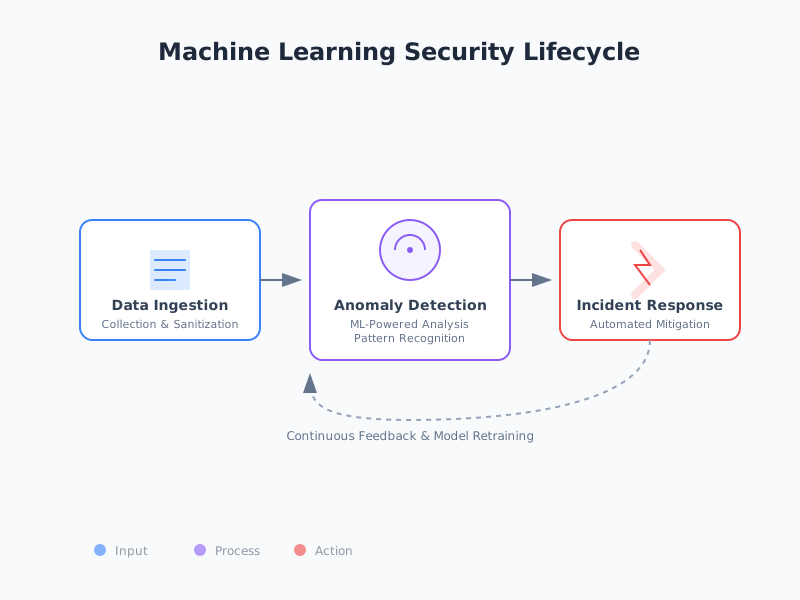 The machine learning security lifecycle ensures threats are detected and mitigated in real-time through an automated feedback loop.
The Power of Automated Incident Response
Detecting a threat is only half the battle; stopping it before data is exfiltrated is the ultimate goal. In 2026, the window between initial compromise and lateral movement has shrunk from days to mere minutes. Human reaction times simply cannot keep up.
This is where automated incident response becomes a game-changer. When an AI system detects a high-confidence threat, it doesn't just send an email alert to a sleeping IT admin—it takes immediate, autonomous action.
Automated incident response playbooks can execute a variety of defensive maneuvers in milliseconds, including:
- Isolating infected endpoints from the broader corporate network.
- Revoking compromised user credentials and enforcing immediate multi-factor authentication (MFA) challenges.
- Blocking malicious IP addresses at the API gateway or firewall level.
- Terminating unauthorized processes and deleting malicious payloads.
By containing the blast radius instantly, automated incident response buys human security teams the time they need to investigate the root cause without the pressure of an actively spreading ransomware infection.
The Future of the AI Security Arms Race
The integration of AI in cybersecurity is an ongoing arms race. Just as defenders use AI to protect their networks, adversaries are using adversarial AI to craft undetectable malware and highly convincing social engineering attacks.
To stay ahead, organizations must adopt a proactive, AI-driven security posture. By embracing threat detection AI, investing in machine learning security, and implementing robust automated incident response protocols, businesses can transform their security operations from reactive cost centers into resilient, autonomous defense systems.