For the past few years, the cybersecurity industry has been hyper-focused on securing the internal software supply chain. We’ve deployed AI-BOMs, hunted down zombie dependencies, and locked down our CI/CD pipelines. But while we were busy guarding the front door of our codebases, attackers found a new way in: the forgotten, internet-exposed edges of our SaaS infrastructure.
In 2026, a supply chain attack doesn't always look like a compromised npm package. increasingly, it looks like a forgotten third-party webhook, an abandoned marketing subdomain, or a misconfigured external vendor portal.
Let's review the recent wave of infrastructure-based supply chain attacks and explore how to actively monitor and defend your internet-exposed SaaS attack surface.
The Evolution of the Supply Chain Attack
When we think of supply chain attacks, we traditionally think of SolarWinds or Log4j—attacks embedded deep within the software we compile and ship. However, modern SaaS applications are decentralized. They rely on dozens of external microservices, third-party APIs, and cloud integrations.
This interconnected web is your modern supply chain. And unlike internal code, it is entirely exposed to the public internet. Recent breaches have highlighted just how vulnerable this perimeter has become.
1. The Shadow API Breach
Earlier this year, a major enterprise CRM provider suffered a devastating breach that didn't originate from their core application. Instead, attackers compromised a third-party analytics vendor. The vendor had persistent, internet-exposed API access to the CRM's backend via an integration that had been officially deprecated in 2024 but was never actually decommissioned. Attackers used this "shadow API" to bypass the CRM's primary authentication gateways entirely.
2. The OAuth Subdomain Hijack
In another high-profile incident, a fintech startup lost thousands of customer records due to a dangling DNS record. The company had previously used a third-party customer support SaaS, routing traffic through support.fintech-startup.com. When they switched vendors, they forgot to remove the CNAME record. Attackers registered the abandoned domain at the old vendor, effectively hijacking the subdomain. They then used it to forge OAuth requests and steal session tokens, exploiting the implicit trust the main application had in its own subdomains.
3. The Vendor Portal Pivot
We also saw the rise of the "portal pivot." Attackers targeted a popular localization and translation SaaS, breaching its internet-facing client dashboard. Because the translation service had push-access to the GitHub repositories of its clients to automatically commit translated strings, the attackers used the exposed SaaS portal as a springboard to inject malicious code directly into the repositories of dozens of downstream victims.
Why the Exposed Attack Surface is Failing Us
These attacks succeed because traditional vulnerability management focuses on what you know you own. But the internet-exposed attack surface is defined by what you've forgotten.
- SaaS Sprawl: Marketing, sales, and support teams routinely spin up new internet-facing tools and integrations without security oversight.
- Ephemeral Infrastructure: Cloud-native environments constantly spin up and tear down load balancers, IPs, and storage buckets. Tracking what is currently exposed is a moving target.
- Third-Party Trust: We implicitly trust traffic coming from "known" vendor integrations, often whitelisting their IPs or granting them overly permissive API scopes.
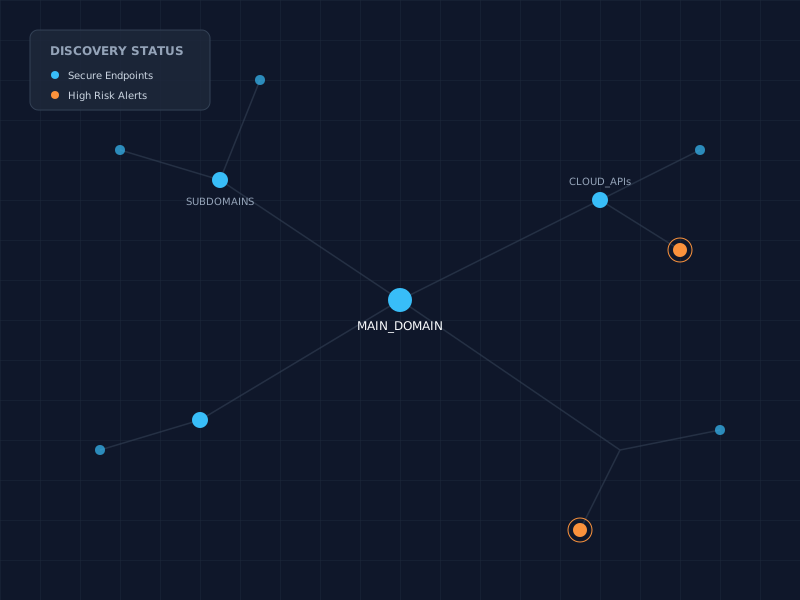 Continuous asset discovery reveals the hidden web of subdomains and APIs that form your attack surface.
How to Monitor Your Internet-Exposed Attack Surface
To defend against these modern supply chain threats, organizations must adopt External Attack Surface Management (EASM) strategies tailored for SaaS environments. You have to look at your perimeter from the perspective of an attacker.
1. Continuous Asset Discovery
You cannot protect what you cannot see. Implement automated discovery tools that continuously scan the internet for assets tied to your organization. This includes monitoring DNS records, SSL/TLS certificates, ASN registrations, and cloud provider IP blocks. The goal is to detect newly spun-up subdomains or exposed staging environments before attackers do.
2. Map the Third-Party Web
Your attack surface extends to the vendors you integrate with. Maintain a dynamic inventory of all third-party API connections, webhooks, and OAuth grants. Regularly audit these connections for least-privilege access. If an integration hasn't been used in 90 days, sever the connection and revoke the API keys.
3. Hunt for Dangling Infrastructure
Make dangling DNS detection a core part of your CI/CD and infrastructure teardown processes. Whenever a third-party SaaS tool is decommissioned, or a cloud bucket is deleted, automated checks must ensure that all routing rules, CNAME records, and API gateways pointing to that resource are simultaneously destroyed.
4. Continuous Perimeter Pentesting
Point-in-time compliance pentests are no longer sufficient. Your exposed attack surface changes daily. Adopt continuous, automated pentesting that specifically targets edge infrastructure. Security teams should simulate "outside-in" attacks, probing for misconfigured CORS policies, exposed administrative panels, and vulnerable third-party endpoints.
The Bottom Line
Securing your software supply chain in 2026 means looking beyond the code repository. As our applications become more distributed, the line between "our infrastructure" and "their infrastructure" blurs. By actively monitoring your internet-exposed attack surface, you can identify and sever the vulnerable links in your SaaS supply chain before they are exploited.