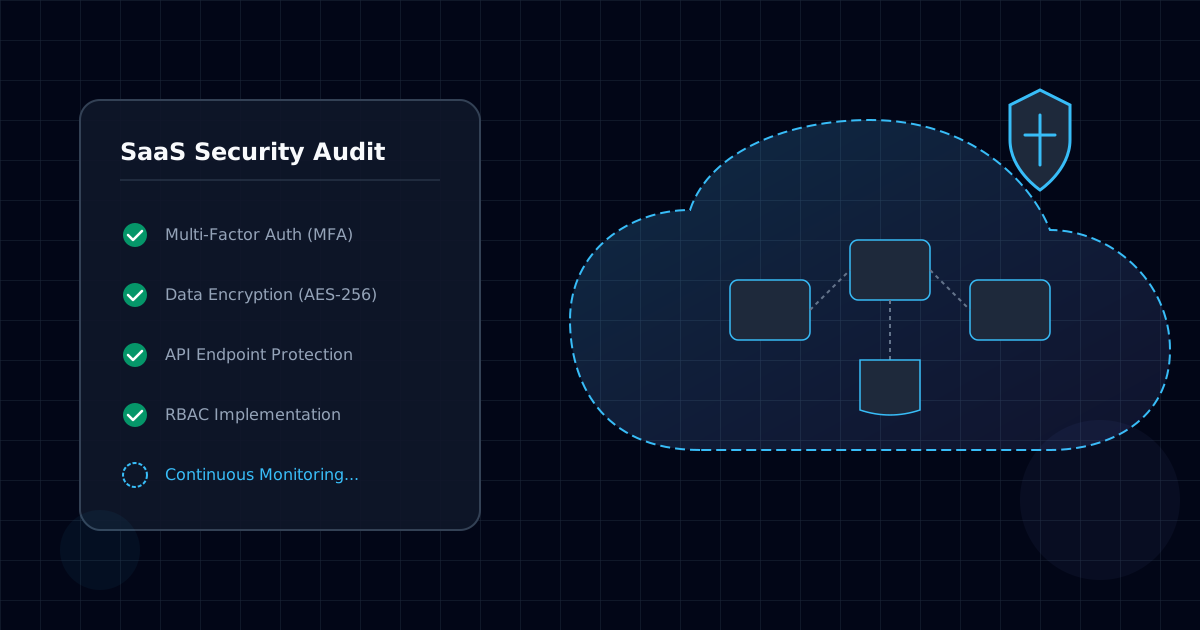
Securing a Software-as-a-Service (SaaS) platform in 2026 is a fundamentally different beast than traditional web application security. With the rise of AI-integrated features, microservices, serverless backends, and complex multi-tenant architectures, a standard vulnerability scan simply won't cut it.
If your goal is to effectively pentest application saas environments, you need a methodology specifically tailored to the unique logic and infrastructure of modern cloud software. A comprehensive saas application pentest must evaluate everything from cross-tenant data isolation to subscription logic and third-party API integrations.
To help security teams and penetration testers navigate this complexity, we've compiled the ultimate 2026 checklist for saas application security testing.
Phase 1: Multi-Tenancy and Data Isolation
The defining characteristic of any SaaS application is multi-tenancy—sharing a single instance of software and supporting infrastructure across multiple customers (tenants). Failing to isolate this data is the most critical SaaS vulnerability.
- Cross-Tenant IDOR (Insecure Direct Object Reference): Attempt to access, modify, or delete resources belonging to another tenant by manipulating predictable identifiers (e.g., UUIDs, sequential IDs) in API requests.
- Tenant Context Manipulation: Test if the application relies on client-side headers (like
X-Tenant-ID) or easily tampered cookies to determine tenant context. - Data Bleed in Shared Databases: If the application uses a shared database with row-level security, test for SQL injection (SQLi) or GraphQL introspection flaws that might allow a user to bypass row-level restrictions and view another company's data.
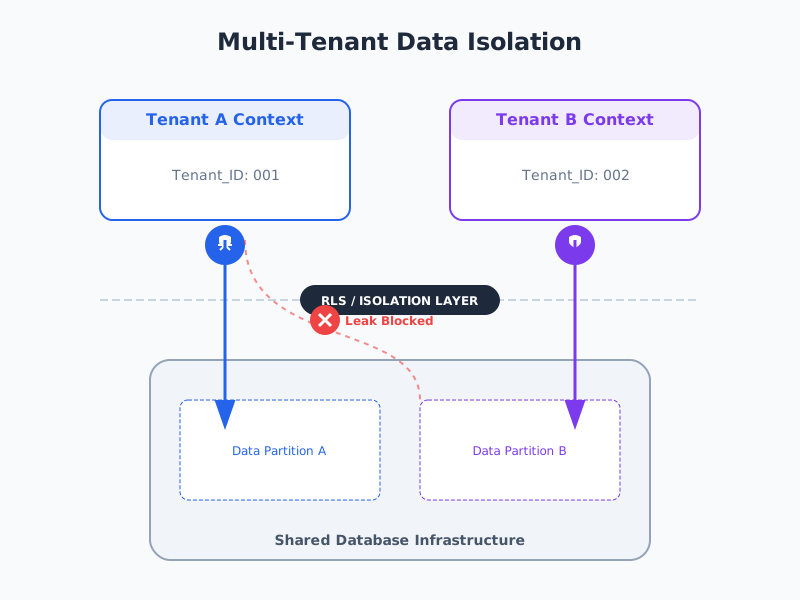 Effective SaaS architectures use logical isolation layers, such as Row-Level Security (RLS), to prevent unauthorized cross-tenant data access.
Phase 2: Identity, Authentication, and Access Control
SaaS platforms often feature complex hierarchies of users (e.g., Super Admin, Tenant Admin, User, Read-Only). Testing Identity and Access Management (IAM) is paramount.
- SSO and SAML/OAuth Vulnerabilities: In 2026, almost all enterprise SaaS apps use Single Sign-On. Test for SAML signature wrapping, XML External Entity (XXE) in SAML parsers, and OAuth redirect URI manipulation.
- Passkey and WebAuthn Bypasses: With the widespread adoption of passwordless authentication, evaluate the implementation of WebAuthn for fallback vulnerabilities or improper registration flows.
- Vertical Privilege Escalation: Attempt to perform actions restricted to Tenant Admins (e.g., adding users, changing billing settings) while authenticated as a standard user.
- Horizontal Privilege Escalation: Attempt to access data belonging to another user within the same tenant who holds the same privilege level.
- JWT (JSON Web Token) Exploitation: Check for weak signing keys, "none" algorithm acceptance, and token expiration flaws.
Phase 3: Advanced API Security
SaaS applications are heavily API-driven, often acting as the connective tissue between the frontend, backend microservices, and third-party integrations.
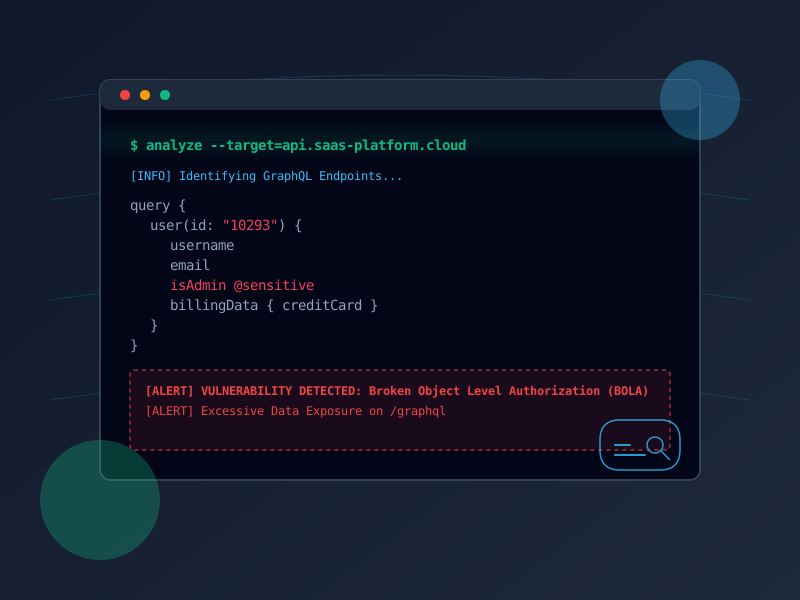
- GraphQL Specific Attacks: Test for query batching attacks (to bypass rate limits), excessive query depth (Denial of Service), and introspection leaks.
- AI and LLM Endpoint Abuse: If the SaaS includes AI features (e.g., generative text, automated data analysis), test for prompt injection, data poisoning, and unauthorized access to the underlying training data context.
- BOLA (Broken Object Level Authorization): Systematically test all API endpoints to ensure the server verifies the permissions of the user requesting the specific object.
- Mass Assignment: Attempt to bind HTTP request parameters into program code variables or objects to modify unauthorized fields (e.g., changing
"is_admin": falsetotrueduring a profile update).
Phase 4: Business Logic and Subscription Abuse
Standard automated scanners cannot detect business logic flaws. This phase of a saas application pentest requires human intuition and an understanding of the application's commercial model.
- Freemium to Premium Bypass: Attempt to access premium features while on a free or basic tier. This often involves manipulating feature flags sent to the client.
- Billing and Payment Manipulation: Test for race conditions during subscription upgrades/downgrades, manipulation of cart totals, and bypassing payment gateways.
- Seat/License Limit Evasion: Try to invite more users to a tenant than the current subscription plan allows by exploiting race conditions or concurrent API requests.
- Resource Exhaustion: Test if a single tenant can consume disproportionate application resources (CPU, storage, API calls), leading to a "noisy neighbor" Denial of Service for other tenants.
Phase 5: Cloud-Native and Infrastructure Testing
While a SaaS pentest focuses primarily on the application layer, the underlying cloud infrastructure often bleeds into application security.
- Serverless SSRF (Server-Side Request Forgery): Exploit application inputs to make the server-side application fetch data from internal cloud metadata APIs (e.g., AWS IMDSv2, Azure Instance Metadata Service).
- Misconfigured Cloud Storage: Check if the application uploads user files to publicly accessible S3 buckets or Azure Blob Storage without proper access controls.
- Subdomain Takeover: SaaS companies frequently spin up and tear down subdomains for marketing or tenant portals. Check for dangling DNS records.
Wrapping Up
To effectively pentest application saas architectures in 2026, security professionals must think like both a malicious hacker and a multi-tenant system architect. By following this checklist, you ensure that your saas application security testing goes beyond surface-level vulnerabilities, deeply probing the isolation, APIs, and business logic that keep your customers' data safe.
Regular, targeted penetration testing is no longer just a compliance checkbox for SOC 2; it is the foundational trust mechanism for modern B2B and B2C SaaS platforms.