In the race to scale a SaaS product, engineering teams spend months hardening their public-facing APIs, implementing complex JWT authentication, and running rigorous penetration tests on their customer dashboards. Yet, behind this armored front gate, many organizations leave the back door wide open: their internal admin tools.
Whether it’s a custom-built dashboard for customer support or a low-code interface designed to manage database records, these internal tools often bypass the security standards applied to the rest of the stack. In an era of sophisticated supply chain attacks and insider threats, this "internal-only" mindset is a disaster waiting to happen.
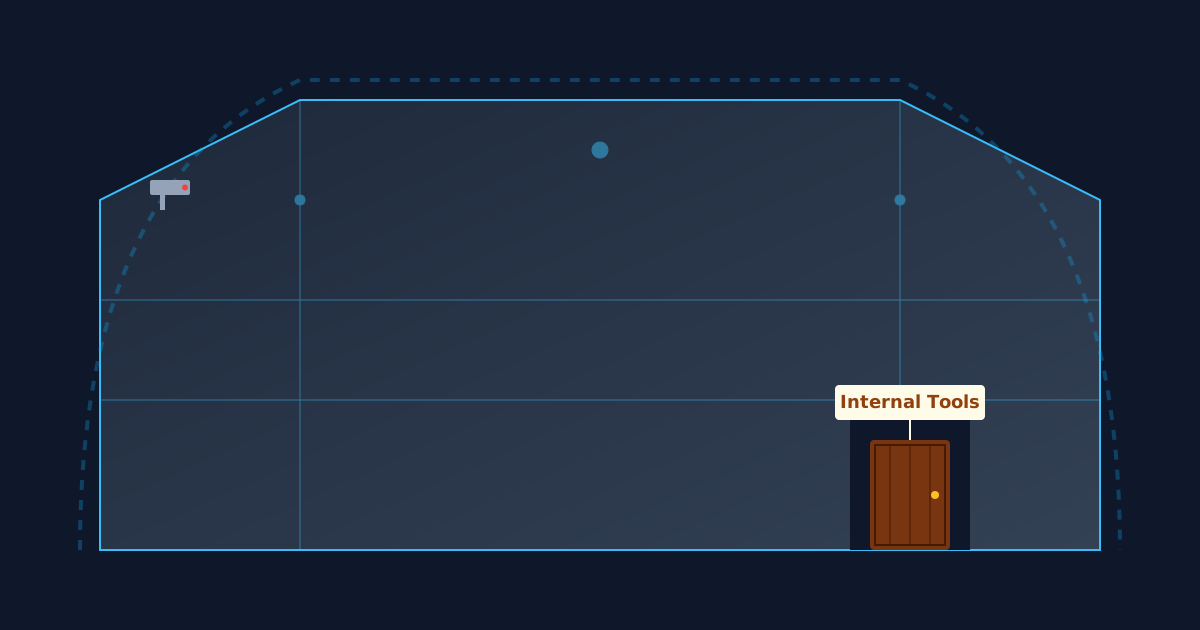
The "Internal Only" Fallacy
The most common security mistake developers make is assuming that because a tool is behind a VPN or requires a corporate login, it doesn't need robust application-layer security. This "soft middle" approach leads to several critical vulnerabilities:
- Over-Privileged Accounts: Internal tools often grant broad permissions by default. A support agent who only needs to reset a password might accidentally have the power to export the entire user database.
- Lack of Audit Logs: While public API calls are meticulously logged, internal actions—like viewing sensitive PII or modifying billing status—often go unrecorded.
- Bypassing Input Validation: Because the users are "trusted" employees, developers frequently skip the rigorous sanitization required for public inputs, making these tools ripe for internal SQL injection or XSS.
The Rise of the Shadow Dashboard
With the explosion of "vibe coding" and AI-assisted development, building internal tools has never been faster. Teams can generate a fully functional CRUD (Create, Read, Update, Delete) interface in minutes. However, this speed often comes at the cost of security debt. When these tools are built outside the standard CI/CD pipeline, they often miss critical security patches and dependency updates.
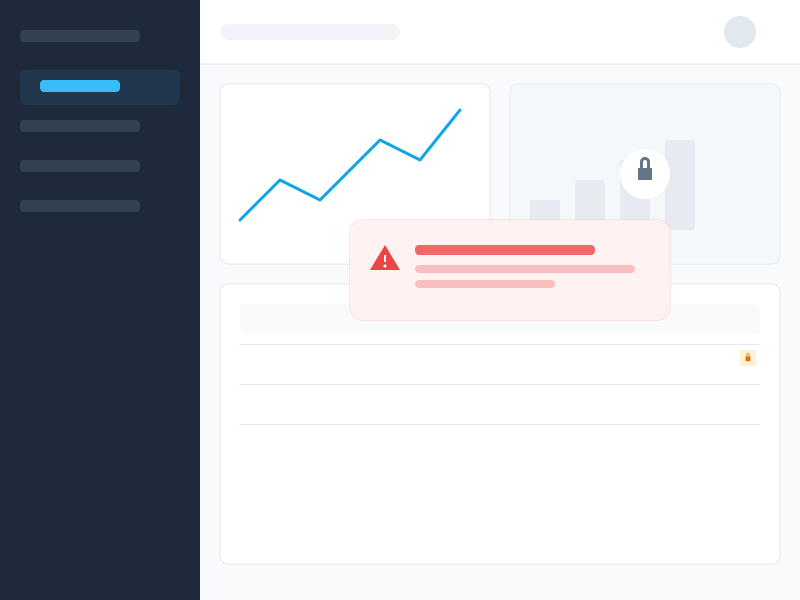 Implementing granular Role-Based Access Control (RBAC) and real-time security monitoring within internal data dashboards.
Furthermore, the use of low-code and no-code platforms to build admin panels can introduce "Shadow IT" risks. If these platforms aren't integrated into the company’s centralized identity provider (IdP) with Multi-Factor Authentication (MFA), a single compromised employee credential can grant an attacker total control over the SaaS backend.
Hardening Your Internal Infrastructure
Securing the hidden perimeter requires a shift in culture. Security should be a first-class citizen for every line of code, regardless of who the end user is. Here are three immediate steps to secure your internal tools:
- Implement Zero-Trust Principles: Never assume a user is safe just because they are on the corporate network. Every request to an internal admin tool must be authenticated, authorized, and encrypted.
- Granular RBAC: Move away from "Admin" and "User" roles. Implement Role-Based Access Control (RBAC) that follows the Principle of Least Privilege (PoLP). Users should only see the data and buttons necessary for their specific job function.
- Automated Scanning: Include internal tool repositories in your automated security scanning pipelines. Vulnerabilities in a support dashboard are just as dangerous as vulnerabilities in your landing page.
Conclusion
As SaaS architectures become more complex, the distinction between "internal" and "external" security is disappearing. An attacker doesn't care if they breach your system through a public exploit or an insecure internal dashboard—the result is the same. By applying the same rigor to your admin tools as you do to your production product, you turn your biggest security hole into a fortified asset.