SaaS platforms are prime targets for modern cyberattacks. Multi-tenant architectures, complex API webs, and rapid CI/CD cycles mean a single vulnerability can expose thousands of customers. This makes SaaS penetration testing not just a compliance checkbox, but a critical survival mechanism.
In this comprehensive guide, we'll break down everything you need to know about penetration testing for SaaS, from understanding how it differs from traditional network testing to the exact methodologies security experts use to uncover hidden flaws.
What is SaaS Penetration Testing?
SaaS penetration testing is a specialized ethical hacking engagement focused on identifying and exploiting security vulnerabilities within a Software-as-a-Service application. Unlike traditional on-premise security assessments, SaaS application security testing must account for cloud infrastructure, multi-tenant data isolation, complex APIs, and frequent code deployments.
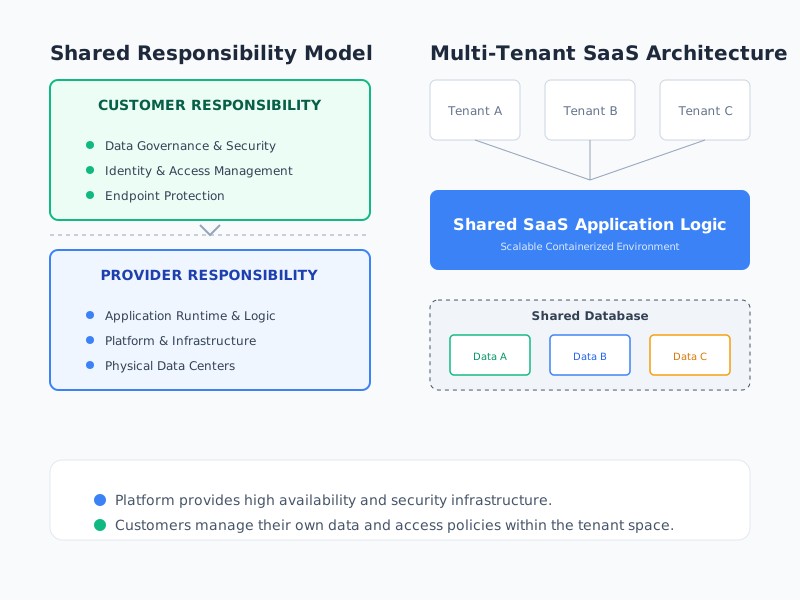 Understanding the division of security duties and the structural isolation of data in modern multi-tenant SaaS environments.
Why Penetration Testing for SaaS is Fundamentally Different
Testing a SaaS product isn't the same as testing a standard web application. Security teams must navigate unique architectural challenges:
- Multi-Tenancy and Cross-Tenant Data Leakage: SaaS apps host multiple customers on the same infrastructure. A critical part of the test is ensuring Tenant A cannot access, modify, or delete Tenant B's data (often tested via Insecure Direct Object References or BOLA vulnerabilities).
- The Shared Responsibility Model: SaaS providers must secure the application and data, while the cloud provider (AWS, GCP, Azure) secures the underlying physical infrastructure. Pen testers must understand where these boundaries lie.
- Heavy API Reliance: Modern SaaS is API-driven. Attackers frequently bypass frontend UI controls and attack APIs directly.
- Continuous Integration/Continuous Deployment (CI/CD): Because SaaS companies push code daily or weekly, a static point-in-time test quickly becomes outdated.
Core Focus Areas in SaaS Application Security Testing
To conduct an effective SaaS pen test, security engineers focus on several critical vectors:
1. Identity, Authentication, and Authorization
Broken access control remains the top risk for SaaS. Testers will rigorously evaluate:
- OAuth and SAML implementations: Are SSO integrations securely configured?
- Session Management: Are JSON Web Tokens (JWTs) properly signed and validated?
- Role-Based Access Control (RBAC): Can a standard user escalate privileges to an admin role?
2. Tenant Isolation Testing
The nightmare scenario for any SaaS founder is cross-tenant leakage. Testers attempt to manipulate parameters, session tokens, and API endpoints to access other organizations' environments.
3. API Security
APIs are the connective tissue of SaaS. SaaS application security testing involves deep API fuzzing, checking for mass assignment vulnerabilities, unauthenticated endpoints, and rate-limiting failures that could lead to Denial of Service (DoS).
4. Cloud Infrastructure Misconfigurations
A SaaS app is only as secure as its host environment. Testers look for exposed S3 buckets, overly permissive IAM roles, and misconfigured serverless functions that interact with the application.
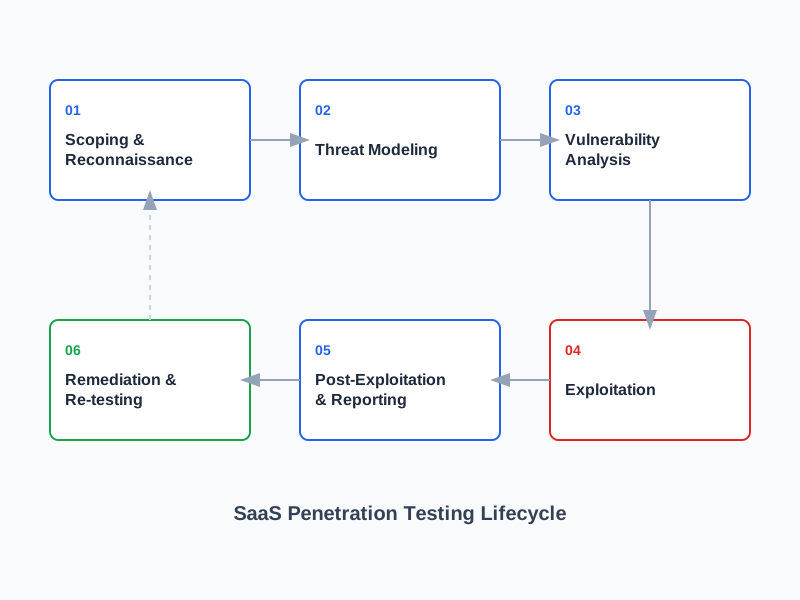 The standard 6-stage methodology for comprehensive SaaS penetration testing.
The SaaS Penetration Testing Process
A rigorous SaaS pen test follows a structured methodology:
- Scoping and Threat Modeling: Defining the application's boundaries, user roles, and critical assets. For SaaS, this often involves creating multiple test accounts across different tenant environments.
- Reconnaissance and Discovery: Mapping the application's attack surface, including hidden API endpoints, third-party integrations, and subdomains.
- Vulnerability Analysis: Using both automated tools and manual exploration to identify weaknesses in business logic, input validation, and access controls.
- Exploitation: Safely exploiting discovered vulnerabilities to demonstrate real-world impact (e.g., extracting dummy PII or achieving account takeover) without disrupting availability for legitimate users.
- Reporting and Remediation: Delivering a detailed report with actionable remediation steps, prioritized by risk severity.
- Retesting: Verifying that the development team has successfully patched the identified vulnerabilities.
Compliance: SOC 2, ISO 27001, and Beyond
For B2B SaaS companies, penetration testing is a non-negotiable requirement for enterprise sales. Frameworks like SOC 2 Type II, ISO 27001, and GDPR mandate regular security assessments. A clean pen test report (often shared as a Letter of Attestation) is a vital asset for your sales and trust teams.
Conclusion
As your platform scales, so does your attack surface. Investing in comprehensive saas penetration testing ensures that your rapid feature development doesn't outpace your security posture. By prioritizing tenant isolation, API security, and robust access controls, you can protect your customers' data and build unshakeable trust in the market.